
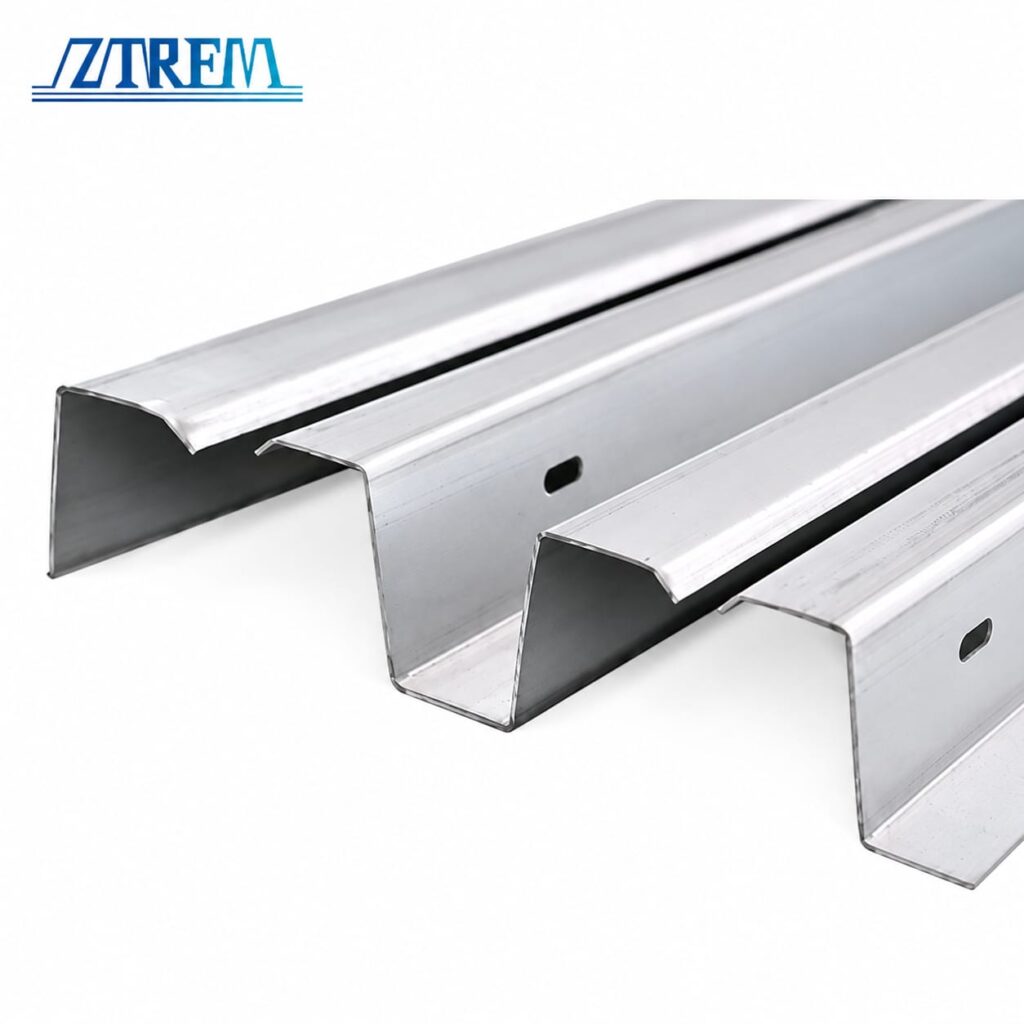
Hat purlins are cold-formed metal profiles with a distinctive hat-shaped cross section. Their lightweight structure, practical installation and stable profile geometry make them suitable for roofing systems, wall supports, light steel buildings, ceiling frames, equipment structures and other industrial projects.
As metal profile manufacturers move toward automated and continuous production, traditional press-brake processing may no longer provide the required efficiency for large or repeated orders. Multiple bending operations require frequent material positioning, manual handling and separate cutting processes.
A Hat Purlin Roll Forming Machine provides a more integrated production method. It continuously converts flat metal material into a finished hat-shaped profile and completes automatic length measurement and cutting. This process is suitable for manufacturers that need consistent profile dimensions, repeatable output and efficient batch production.

How Does a Hat Purlin Roll Forming Machine Work?
A standard Hat Purlin Roll Forming Machine generally follows this production sequence:
Decoiling → Feeding and Guiding → Roll Forming → PLC Length Measurement → Hydraulic Cutting → Product Collection
The production process begins with the decoiler, which releases the metal coil at a controlled rate. The feeding guide then aligns the material with the centerline of the roll forming unit.
After entering the main machine, the flat strip passes through several sets of forming rollers. Each roller station changes the material shape gradually instead of completing the full bend in one step. At the end of the forming section, the material reaches the required hat profile dimensions.
The operator enters the target length and order quantity through the PLC touchscreen. When the profile reaches the preset length, the cutting system automatically completes the cutting cycle.
Compared with separate bending operations, continuous roll forming reduces repeated positioning, material transfer and manual measurement. As a result, manufacturers can achieve more consistent profile shapes and product lengths.
Main Components of an Automatic Hat Channel Roll Forming Machine
1. Decoiler
The decoiler supports and releases the metal coil before the material enters the production line.
Depending on the coil weight, material width and automation requirements, the production line can use a manual decoiler, electric decoiler or hydraulic decoiler.
A stable decoiling process helps prevent sudden material tension and uncontrolled coil movement. It also provides smoother feeding conditions for the subsequent forming stations.
2. Feeding and Guiding System
The feeding guide keeps the material correctly aligned before it enters the main roll forming machine.
Incorrect feeding may cause several production problems, including:
- Uneven profile dimensions;
- Asymmetrical side edges;
- Lateral bending;
- Twisted finished profiles;
- Unstable forming results.
The guide width and structure can be designed according to the material width and final profile dimensions. A properly adjusted guiding system provides a reliable starting point for the entire forming process.
3. Main Roll Forming Unit
The main forming unit is the core section of the Hat Profile Roll Forming Machine.
The material passes through multiple roller stations and gradually changes from a flat strip into a hat-shaped section. The number of forming stations and the roller arrangement depend on several factors:
- Hat profile dimensions;
- Material thickness;
- Material yield strength;
- Required dimensional tolerance;
- Target production speed;
- Surface quality requirements.
A well-designed forming process distributes the deformation across several stations. This approach helps reduce sudden stress concentration and minimizes profile twisting, edge waves, excessive springback and surface scratches.
The roller material, shaft diameter, supporting frame and transmission structure should also match the selected material and profile design.
4. PLC Control System
The PLC control system manages machine operation, product length and production quantity.
Operators can enter order information through the touchscreen and select manual or automatic operation. A standard control system may include:
- Product length setting;
- Production quantity setting;
- Automatic counting;
- Manual adjustment mode;
- Automatic production mode;
- Emergency stop protection;
- Operating status display;
- Basic fault notifications.
PLC-based length control reduces dependence on manual measurement. It also helps manufacturers maintain more consistent product lengths across repeated production batches.
The touchscreen language, electrical voltage and control components can be selected according to the customer’s local operating requirements.
5. Hydraulic Cutting System
A standard Automatic Hat Purlin Machine usually uses a hydraulic cutting system to cut the finished profile to the required length.
The cutting die is designed around the actual profile shape. This allows the machine to complete the cut while limiting excessive deformation at the profile end.
For regular production speeds, stop-to-cut operation is a practical option because it offers:
- Stable cutting performance;
- A relatively simple structure;
- Convenient maintenance;
- Consistent cutting positions;
- Clean profile ends when properly adjusted.
Other cutting solutions can be considered when a project requires a higher production speed or a different cutting process.
6. Run-Out Table and Product Collection
After cutting, the finished hat channel moves onto a run-out table for support and collection.
A standard production line may use a basic receiving table. For longer products or higher-output projects, the line can be equipped with a powered conveyor or automatic stacking system.
A suitable product collection method reduces direct impact on the finished profiles and helps protect the material surface during unloading.
Main Technical Specifications
A Hat Section Roll Forming Line is generally customized according to the customer’s profile drawing and production requirements. The following table shows a typical reference configuration.
| Parameter | Reference Specification | Parameter | Reference Specification |
|---|---|---|---|
| Machine Name | Hat Purlin Roll Forming Machine | Control System | PLC automatic control |
| Suitable Materials | Galvanized steel, pre-painted steel and other metal materials | Forming Method | Continuous cold roll forming |
| Finished Profile | Hat-shaped steel section | Production Speed | Up to approximately 30 m/min |
| Product Length | Adjustable through PLC | Cutting Method | Hydraulic length cutting |
| Transmission | Designed according to machine configuration | Electrical Voltage | Customized for local standards |
| Profile Dimensions | Designed according to customer drawings | Machine Color | Customizable |
| Operating Mode | Manual and automatic modes | Discharge Method | Run-out table or custom conveyor |
These specifications are provided for general reference. The final machine configuration must be confirmed according to the actual profile drawing, material thickness, material strength and required production capacity.
The maximum rated speed does not mean every profile can be produced continuously at that speed. Actual operating speed may vary depending on:
- Material thickness;
- Steel strength;
- Profile complexity;
- Cutting cycle;
- Product length;
- Decoiling performance;
- Finished-product collection.
A balanced production line should focus on stable output rather than speed alone.

Common Applications of Hat-Shaped Steel Profiles
Hat channels combine a practical cross section with convenient installation. They can be used in a wide range of construction and industrial applications.
Common applications include:
- Roof and wall support systems;
- Light steel building structures;
- Ceiling and partition framing;
- Solar panel supporting structures;
- Equipment frames;
- Machinery support brackets;
- Decorative metal frameworks;
- Storage and warehouse structures;
- Customized industrial support components.
The required material thickness and profile dimensions depend on the final application. A lightweight ceiling channel and a structural support profile may look similar, but they normally require different materials and machine configurations.
Before ordering a Metal Hat Channel Machine, manufacturers should confirm how the finished profile will be used and whether the project has specific dimensional or load-bearing requirements.
What Information Is Required for Machine Customization?
To design a suitable hat channel production line, the machine supplier usually needs the following information:
- A complete cross-sectional drawing;
- Dimensions of each part of the profile;
- Material type;
- Material thickness range;
- Material yield strength;
- Required product length range;
- Target production speed;
- Expected daily or monthly output;
- Local industrial voltage and frequency;
- Requirements for punching, automatic loading, conveying or stacking.
A clear two-dimensional profile drawing is the preferred reference for roller and cutting-die design.
When a formal drawing is not yet available, the customer may initially provide a physical sample, clear profile photographs and detailed measurements. However, the final design should still be confirmed through an accurate drawing before manufacturing begins.
Why Use an Automatic Hat Purlin Production Line?
An automatic Hat Channel Roll Forming Machine combines several independent production steps into one continuous line.
Its main benefits include:
- Continuous production for repeated orders;
- Automatic length control through PLC;
- Reduced manual measurement;
- Consistent profile geometry;
- Automatic product counting;
- Less material handling between processes;
- Custom profile production based on drawings;
- Electrical systems adapted to local standards;
- Easier order management;
- Expandable production functions.
For manufacturers producing the same hat profile or a group of similar specifications over a long period, automated roll forming can reduce repeated setup work and improve production consistency.
The machine can also help reduce reliance on manual bending accuracy. Once the rollers and control parameters are correctly adjusted, the line can repeatedly manufacture profiles according to the confirmed production settings.

Zhongtuo Hat Purlin Roll Forming Solutions
Zhongtuo provides customized Hat Purlin Roll Forming Machine solutions based on the customer’s profile drawing, material properties and production target.
The production line can be configured around different requirements, including:
- Manual, electric or hydraulic decoiling;
- Customized feeding guides;
- Specially designed forming rollers;
- Reinforced machine structures;
- PLC automatic control;
- Hydraulic profile cutting;
- Product conveying and collection;
- Customized electrical voltage;
- Multilingual touchscreen interfaces.
Before delivery, the machine can be tested using suitable material to check the profile dimensions, machine operation and cutting performance.
Zhongtuo can also provide operating documentation, installation guidance and remote technical assistance. When required by the project, technical personnel can be arranged to support installation and machine commissioning at the customer’s location.
Conclusion
A Hat Purlin Roll Forming Machine integrates material feeding, continuous forming, automatic length measurement and hydraulic cutting into one production system.
Compared with separate bending and cutting operations, the automated line can reduce repeated positioning, manual handling and measurement work. It also helps manufacturers maintain more consistent profile dimensions during batch production.
When selecting a Hat Channel Roll Forming Machine, buyers should not evaluate the equipment only by price or maximum speed. Profile dimensions, material strength, thickness range, roller design, machine structure, cutting method and technical support are equally important.
A machine configured around the actual product requirements can provide more stable production and better long-term value for hat channel manufacturers.